What happens at the root–soil interface in rice? New bioimaging research reveals how rice roots reshape flooded soils, creating dynamic micro-scale patterns of nutrients and elements. These insights could improve nutrient efficiency, reduce toxic element uptake, and support the development of better-adapted rice varieties.
A new study published in Environmental and Experimental Botany uses advanced bioimaging techniques to reveal how rice roots actively reshape the chemical environment of flooded soils at a microscopic scale.
Focusing on Oryza sativa grown under paddy conditions, researchers developed a method to capture “freshly exposed” rhizosphere soil; the thin zone surrounding roots where critical nutrient exchanges occur. This approach allowed scientists to map the spatial distribution of multiple elements (>20) with unprecedented detail.
The results show that rice roots create highly dynamic and localized chemical gradients, influencing the availability of key nutrients and metals such as iron and other trace elements. These patterns vary over very small distances and are tightly linked to root activity, soil type and rooting depths.
Such fine-scale insights help explain how rice manages nutrient uptake in low-oxygen (anaerobic) paddy soils, where chemical processes differ significantly from dryland systems. The findings also highlight the importance of root–soil interactions in controlling nutrient efficiency and element mobility.
By uncovering how rice modifies its immediate environment, the study provides a foundation for improving nutrient management, reducing toxic element uptake, and breeding varieties better adapted to flooded soils.
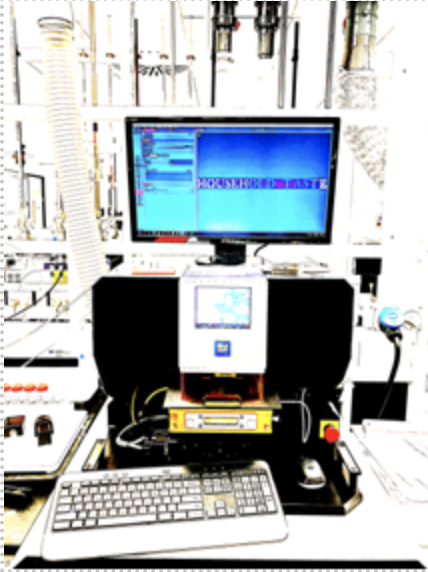
Tools & resources: This new method uses an ESI 193 nM laser system (USA) with a TwoVol2 ablation chamber interfaced with a triple quadrupole ICP-MS (Thermo Scientific iCap TQ, USA). It can be used for measurement of soils/rhizospheres and plant tissues.
Meharg, A.A., Carey, M., Williams, P.N., Moreno-Jimenez, E., Rodríguez-Rastrero, M., McCreanor, C. and Meharg, C., 2026. Multi-elemental bioimaging of freshly exposed Oryza sativa (L.) rhizospheres grown in flooded soils. Environmental and Experimental Botany, p.106356.
https://www.sciencedirect.com/science/article/pii/S0098847226000481
For further details contact Paul Williams (p.williams@qub.ac.uk).